Chart tool
Kerama Islands snorkeling with sea turtles: where and how
Full-day Kerama Islands snorkeling tour from Naha
★ 4.5 · 891 ratings
The quick version
Sea turtles in the Kerama Islands are watched from a distance at Ama Beach on Zamami and Nishibama Beach on Aka, and a boat tour cannot promise a sighting.
Turtle facts
Turtle weather by month
Twelve months of daylight and air temperature
Choose a month to compare day length and the usual warmth at Naha, then think about a vest and the sun.
Sunset
Jan
The average daily high in January is 19.7 °C at Naha.22
Mar
The average daily high in March is 21.9 °C at Naha.22
Aug
The average daily high in August is 31.7 °C at Naha.22
Sunset is worked out for the 15th of each month on Japan time. Day length is for the Kerama Islands; temperatures come from the NOAA station at Naha, 38 km away, 1991 to 2020. Sea temperatures are not part of this record.
Which turtles live around Zamami, Aka and Fukaji, the beaches and boat stops where they turn up, the rule that protects them and what a tour can honestly promise.
Editorial team, keramaislandssnorkeling.com · Updated November 6, 2026 · 7 mins to read
Quick look
- SpeciesHawksbill, green and loggerhead turtles nest around the Kerama Islands.1
- Best beachesAma Beach on Zamami and Nishibama Beach on Aka both report green turtles.2,3
- The ruleDo not approach or chase a turtle; watch from a distance.4
- On a tourOur tour searches for turtles at 2-3 spots and cannot promise a sighting.
- NestingSea turtles lay eggs on Fukaji's shores and other island beaches.5,6
Which turtles live around the Kerama Islands
Visit Okinawa lists hawksbill, green and loggerhead sea turtles among the animals that nest around the Kerama Islands.1 That mix is why the group has a name as a turtle destination as well as a place for coral and clear water. Different animals use the islands in different ways, with some grazing on the reef, some resting under ledges and some coming ashore at night to lay eggs, and each of these behaviors asks something different of the people nearby.
The Japan Tourism Agency adds that sea turtles lay their eggs on the islands' beaches, and that the reefs provide food and habitats for colorful tropical fish such as damselfish and butterfly fish.6,7 Healthy reef matters because it is the animals' larder and shelter. Around 248 kinds of coral grow in these waters, in table, branch and horned forms, and a turtle at rest often settles among exactly those shapes.8
For divers the picture is similar: at Gina, off Aka, you stand the chance to see both green and hawksbill turtles.9 The point of a visit is not to count animals but to see them behaving normally. A turtle that rests, grazes or rises for air without a crowd around it is a good sign for the whole place, and a reminder that you are a guest in its home rather than a spectator at a show.
Where to look
Turtle spots around the Kerama Islands
| Place | Island | What the sources say | Season note |
|---|---|---|---|
| Ama Beach | Zamami | Green turtles; some lay eggs2 | Lifeguards late April to early November13 |
| Nishibama Beach | Aka | Green turtles and reef fish3 | 20 min walk from port12 |
| Tokashiku Beach | Tokashiki | Called Turtle Beach14 | Covered on our Tokashiki sister site |
| Fukaji shores | Fukaji | Nesting beaches5 | Keep off at night |
| Gina dive site | Aka | Green and hawksbill turtles9 | Beginner level15 |
Locations are named by Japan's tourism board and Visit Okinawa; none of these promises a sighting.
Where to see sea turtles in Okinawa's Kerama group
Ama Beach on Zamami is the beach most often named. The calm, shallow water is ideal for children, and you may have the chance to swim with the sea turtles that call the area home.10 Japan's tourism board says green turtles can be spotted on quiet Ama Beach, where some come ashore to lay eggs during the spawning season.2 The good snorkeling lies farther out, so you have to swim some way from the sand to reach it, which is another reason to wear a life jacket and go slowly.11
Nishibama Beach on Aka is another good option. From there you can explore coral reefs and see schools of colorful tropical fish as well as green sea turtles.3 It is a 20-minute walk or a 10-minute bike ride from Aka Port, and lifeguards are on duty at the Zamami and Aka beaches from late April until early November.12,13 Outside that window you swim without cover, so choose a calm day and a partner.
Tokashiku Beach on Tokashiki, also known as Turtle Beach, is lauded as one of the best places in Okinawa to swim with sea turtles.14 It belongs to the neighboring island and is covered on our sister site about Tokashiki. On Fukaji, between Aka and Geruma, the shore is a place where the local turtle population comes to lay eggs, so give that beach to the animals.5 Watching from a path is better than walking on the sand.
Traveler ratings
How guests rate five Kerama snorkeling tours
- Tokashiki turtle trip4.9
- Full-day, Naha or Chatan4.6
- Our full-day tour4.4
- Half-day tour4.1
Traveler ratings on the listings; review counts differ widely, from 36 to 891, so compare them with care.
The distance rule and good manners in the water
The guidance is short and clear. If you spot a sea turtle, do not approach it or chase it, and protect its safety and habitat by watching from a distance.4 That is the rule for the beaches of the national park, and it applies equally on a boat tour. You will see more by hovering still than by swimming after an animal that is only trying to reach the surface, and a calm swimmer is far more likely to get a close, unhurried look.
Divers get a parallel warning: take care not to disturb turtles, especially when they are sleeping or eating.18 A turtle must surface for air, and a crowd of swimmers blocking its path costs it energy it cannot spare. Float flat, leave a clear route to the surface and keep your hands to yourself. A photograph is never worth a turtle that panics, and a close shot from a respectful distance often looks better anyway.
More generally, the park asks visitors to treat the natural environment and the animals who live in it with care and respect.19 A life jacket and snorkeling gear are all you need to explore the reefs at Furuzamami, Ama and Nishibama, and a life jacket helps you stay horizontal without kicking up sand or touching coral.16 Keep your fins high, keep your arms still and treat every turtle as a chance encounter that you are lucky to have.
Match your trip
Which turtle plan fits you?
Choose the line closest to your wish and read the answer beside it
If I am staying on Zamami
Ama Beach
If I am staying on Aka
Nishibama Beach
If I have a day from Naha
Boat tour
It searches for turtles at 2-3 spots by speedboat.
If I want to dive, not snorkel
Gina
A beginner-friendly site where turtles are seen.9
If I want certainty
Choose a different animal
Neither turtles nor whales are guaranteed on the tour.
Okinawa turtle snorkeling on a boat tour: honest odds
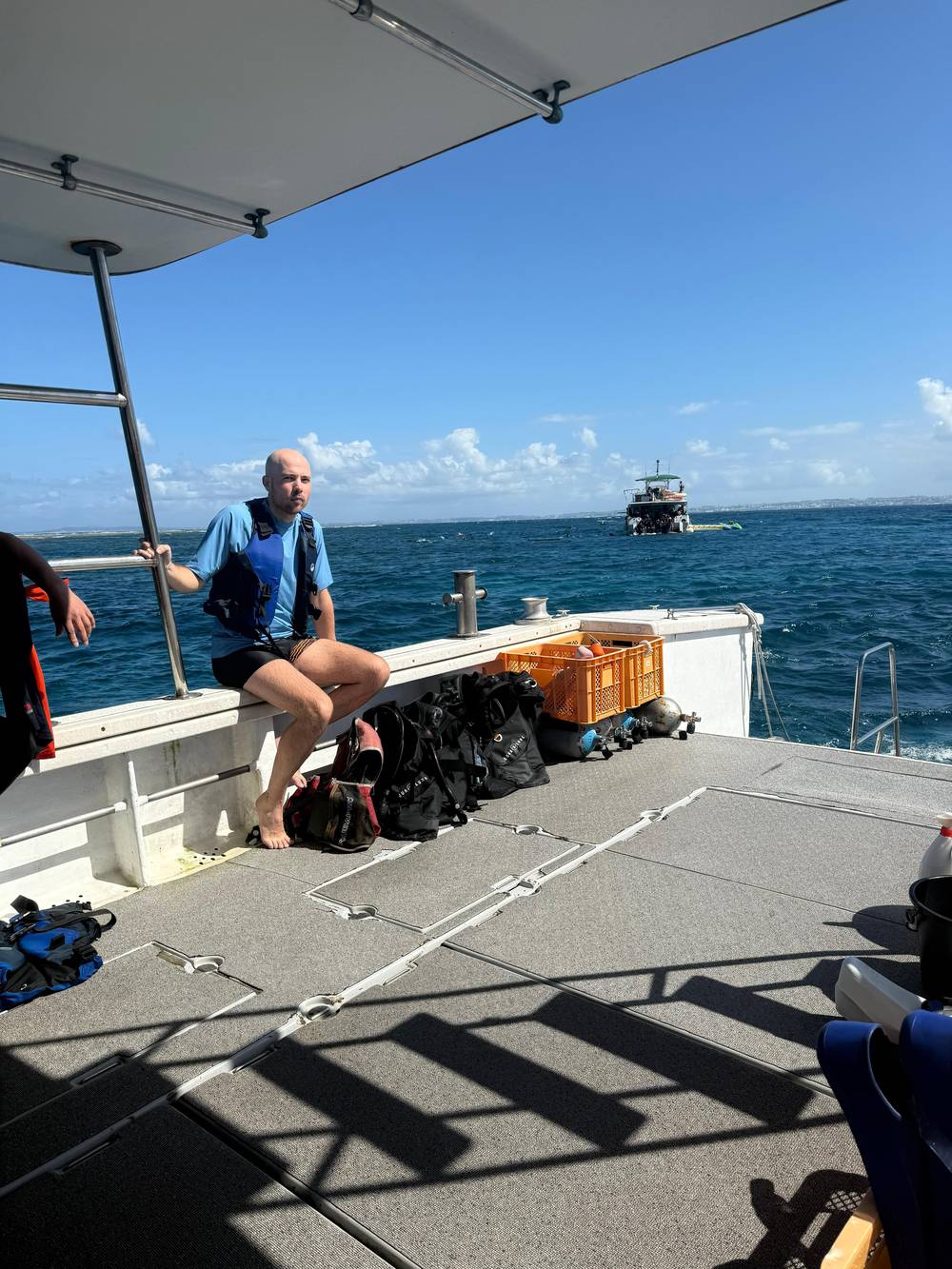
Okinawa turtle snorkeling is never a guarantee, and our site tour says so. It searches for sea turtles at 2-3 spots and warns that you may not meet any. The islands visited may be Zamami, Tokashiki and Maejima, and which ones you see depends on weather and sea conditions. That is typical of wildlife trips, and a turtle seen from the water is a gift rather than an entitlement, so go with the attitude that the reef, the fish and the clear water are the sure things.
The tour is a full day with snorkeling in the national park, rated 4.4 from 891 reviews. All staff are certified instructors with first aid training, and a wetsuit or life jacket is required for safety. The tour does not include island hopping, so it will not take you to a specific beach, and the plan may change or be canceled depending on the weather on the day. Build a spare day into your trip if turtles are your top priority.
If turtles are your main reason for coming, compare it with a dedicated turtle snorkeling tour. One Tokashiki trip from Naha lasts 7 to 9 hours, starts from $90 and is rated 4.9 from 36 reviews. Read the stops carefully: that trip includes a ferry, a bus and Tokashiku Beach, while our boat tour runs by speedboat around the archipelago. These suit different travelers, and the rating on fewer reviews is a pointer, not a verdict.
Price the trip
What a turtle day costs
Choose your group size and compare three ways to meet the animals
Compare 3 side by side
What a turtle day costs
Choose your group size and compare three ways to meet the animals
- Full-day snorkeling2-3 spots · starts at, per person $83
≈
View - Tokashiki turtle trip7 to 9 hours · starts at, per person $90
≈
View - Intro-diving dayDive with turtles · starts at, per person $70
≈
View
Starting prices on GetYourGuide, exchanged at the ECB reference rate. The booking page gives the exact price.
A turtle day
From the boat to the water and back
Morning
Pickup and port
Pickup from Naha hotels is included on our full-day tour.
Crossing
Speedboat to the islands
The islands visited depend on the weather and the sea.
Spot one
Snorkel with an instructor
The tour searches for turtles at 2-3 spots.
Midday
Rest and a drink
Shaved ice is served on larger ships in August and September.
Afternoon
Last snorkel
Stay horizontal, keep clear and let the turtle choose.4
Return
Speedboat back to Naha
The day lasts 7 hours, with drop-off in Naha.
When the water is warm enough to stay in
The sea remains warm for most of the year, so you can enjoy snorkeling even when summer is over.33 The station at Naha, 38 km from the islands, records an average daily high of 31.7 °C in August and 19.7 °C in January.34,34 These are air temperatures from a mainland station, not sea readings, so treat them as a guide to comfort on the boat and on the beach rather than a water chart for the reef.
For water, our tour gives a clue: in winter the water temperature is about 22 °C and the air about 20 °C, and 3 mm hooded vests and coats are available. That is a cool swim for anyone used to the tropics, so the vests matter, and so does a warm layer for the time you spend out of the water. Summer visits are warmer, and shaved ice is offered on the larger ships in August and September.
Winter brings a second animal to the same waters. Humpback whales visit the Kerama Islands from late December to early April.35 Our tour offers whale watching only from 12 January to March, and neither whales nor turtles are guaranteed. If you want to see both animals on a single trip, choose the shoulder of the season, pack warm clothes and keep your expectations flexible. Our whale watching page covers the season in detail.
Video
Zamami Island in Okinawa: beautiful beaches and sea turtles
Marcus and Carmen on YouTube · The video only starts loading on your tap.
If you spot a sea turtle, do not approach it or chase it. Protect the turtles' safety and habitat by watching from a distance.
Before you swim
A turtle-friendly checklist
Respect the animal3
Diving with turtles and what to pack
Gina, off Aka, is a beginner site at 25 m deep with minimal current and no license listed, and it is described as beginner-friendly with turtles in view.15,9 If you are not a snorkeler at heart, an intro-diving day lets you meet turtles from below. One Naha trip lasts 8 hours and starts from $70, rated 4.7 from 255 reviews. Our Kerama diving page compares the sites, the licenses and the price of a dive.
Anyone with health conditions should read the tour notes before booking. Minors need parental consent, a medical check sheet is sent by email at booking, and no refund is given to anyone who fails the health screening. That may sound strict, but it keeps a boat of strangers safe when the sea is rough, and it means you should answer the questions honestly instead of hoping nobody checks.
Pack sun protection, a rash vest or wetsuit, and a bag for wet kit. The sun can be strong in Okinawa even in winter.32 If you tend to get seasick, take medicine before boarding, since a sick swimmer sees nothing of the reef and the crossing is long enough to matter.36 Bring a waterproof camera only if you can keep it out of the way of the animals, and never at the cost of the distance rule.
FAQ
Brief questions, brief answers.
Where can you see sea turtles in the Kerama Islands?
Is a turtle sighting guaranteed on a tour?
Our tour searches for turtles at 2-3 spots and says you may not meet any, depending on weather and sea conditions.
Can you touch or chase a sea turtle?
Japan's tourism board says not to approach or chase a turtle and to protect its safety and habitat by watching from a distance.4
Which turtles nest in the Kerama Islands?
Can beginners dive with turtles?
Gina is a beginner-friendly dive site where both green and hawksbill turtles can be seen.9
Is the water warm in winter?
Our tour gives about 22 °C for winter water and offers 3 mm hooded vests and coats.
Are there lifeguards at turtle beaches?
Lifeguards are on duty at the Zamami and Aka beaches from late April until early November.13
Sources
- Visit Okinawa Japan · Kerama Islands diving ↩
- Japan National Tourism Organization · Explore Keramashoto National Park ↩
- Japan National Tourism Organization · Explore Keramashoto National Park ↩
- Japan National Tourism Organization · The beaches of Zamamijima and Akajima islands ↩
- Japan Tourism Agency · Aka, Geruma and Fukaji islands overview ↩
- Japan Tourism Agency · Kerama Islands National Park overview ↩
- Japan Tourism Agency · Kerama Islands National Park overview ↩
- Japan National Tourism Organization · Explore Keramashoto National Park ↩
- Visit Okinawa Japan · Kerama Islands diving ↩
- Japan National Tourism Organization · The beaches of Zamamijima and Akajima islands ↩
- Japan National Tourism Organization · Zamami Island (Zamamijima) ↩
- Japan National Tourism Organization · The beaches of Zamamijima and Akajima islands ↩
- Japan National Tourism Organization · The beaches of Zamamijima and Akajima islands ↩
- Japan National Tourism Organization · Explore Keramashoto National Park ↩
- Visit Okinawa Japan · Kerama Islands diving ↩
- Japan National Tourism Organization · The beaches of Zamamijima and Akajima islands ↩
- Japan Tourism Agency · Aka, Geruma and Fukaji islands overview ↩
- Visit Okinawa Japan · Kerama Islands diving ↩
- Japan Tourism Agency · Kerama Islands National Park overview ↩
- Japan National Tourism Organization · Zamami Island (Zamamijima)
- Japan National Tourism Organization · Explore Keramashoto National Park
- Japan National Tourism Organization · Sustainable whale-watching in Zamami ↩
- Japan National Tourism Organization · Zamami Whale Watching Association
- Japan National Tourism Organization · The beaches of Zamamijima and Akajima islands
- Japan National Tourism Organization · The beaches of Zamamijima and Akajima islands
- Japan National Tourism Organization · Explore Keramashoto National Park
- Japan National Tourism Organization · Beautiful Kerama Blue of Zamami
- Japan National Tourism Organization · Beautiful Kerama Blue of Zamami
- Japan Tourism Agency · Aka, Geruma and Fukaji islands overview
- Japan National Tourism Organization · Explore Keramashoto National Park
- Japan Tourism Agency · Aka, Geruma and Fukaji islands overview
- Visit Okinawa Japan · Your guide to whale watching in Okinawa ↩
- Japan National Tourism Organization · Beautiful Kerama Blue of Zamami ↩
- NOAA · Global Summary of the Month, Station Naha, 38 km from the islands (GHCN JA000047936), 1991 to 2020 ↩
- Japan National Tourism Organization · Explore Keramashoto National Park ↩
- Visit Okinawa Japan · Your guide to whale watching in Okinawa ↩
More to read